

Most people reach for something to eat when life gets overwhelming — and that alone is not a problem. But when food becomes the go-to response every time pressure builds, and when that pattern starts controlling your choices and your mood, something deeper is at play.
This article is here to help readers understand the connection between stress and eating disorders, specifically stress eating disorder, and to offer practical, realistic strategies to break free from stress-driven food cravings through mindfulness, stress management, and support.
What Is Stress Eating Disorder?
Defining the Condition
Stress eating disorder is a pattern where a person consistently uses food as a way to cope with emotional distress, tension, or anxiety — not to satisfy physical hunger. It goes beyond the occasional comfort bowl of pasta after a rough week. For people dealing with this condition, food becomes emotionally loaded: it’s a reward, a soother, a distraction, and sometimes even a punishment.
What separates stress eating disorder from regular eating habits is the loss of awareness and control. People who eat when they’re stressed often don’t realize they’ve been eating until the food is gone. They weren’t necessarily hungry. They may feel guilt or shame afterward, which ironically can add to their stress and restart the cycle.
Symptoms to Watch For
Recognizing the signs of stress eating disorder matters because the behavior can be easy to dismiss or rationalize. Common symptoms include:
- Eating in response to emotions — boredom, frustration, loneliness, or anxiety — rather than actual hunger
- Craving specific high-fat or high-sugar foods when stressed
- Feeling a brief sense of relief after eating, followed by guilt or regret
- Difficulty stopping once eating has started, even when physically full
- Using food as the main strategy for managing negative emotions
Over time, this disorder affects both physical and mental health. Weight gain, digestive issues, and disrupted sleep are common physical effects. On the mental health side, it often coexists with anxiety, depression, and low self-esteem — creating a feedback loop that’s hard to break without awareness and support.
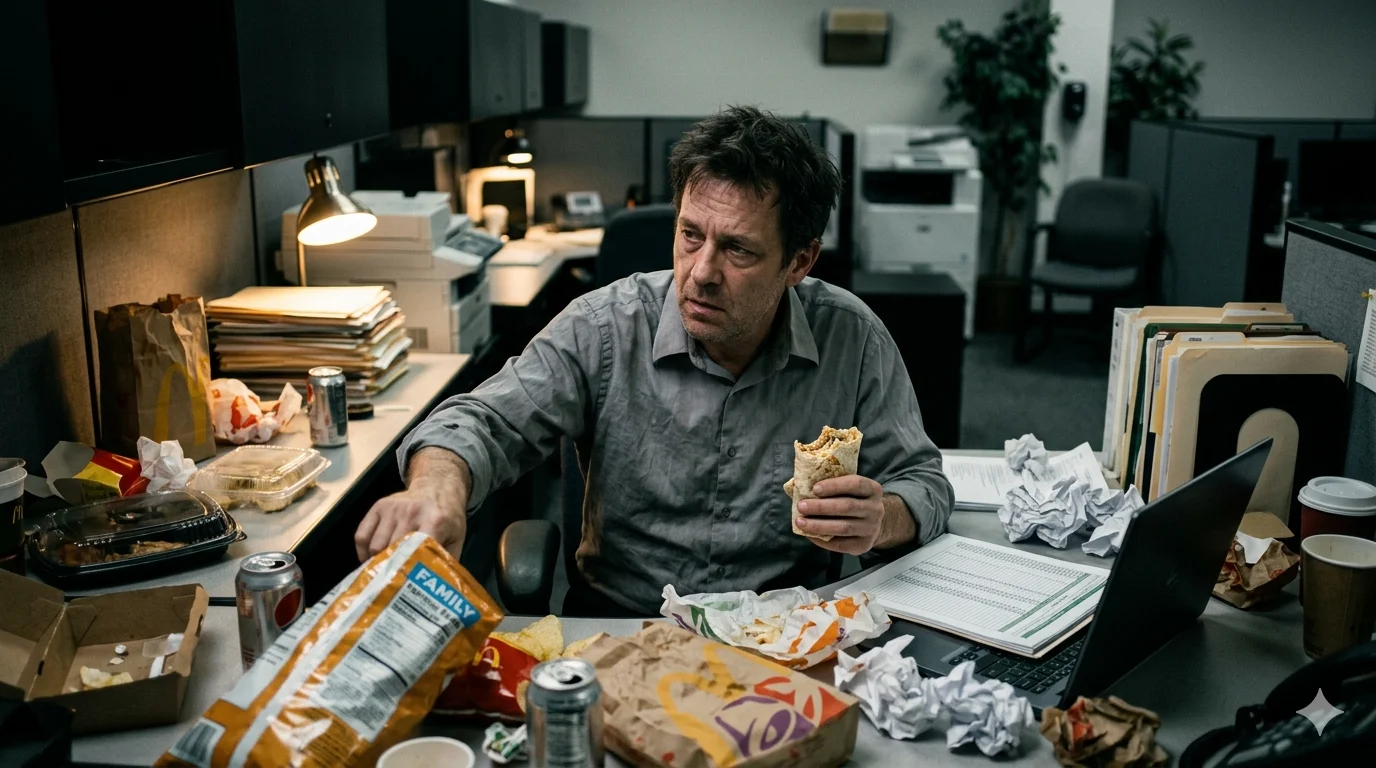
How Stress Changes the Way People Eat
Emotional vs. Physical Hunger
One of the most important distinctions to understand in breaking the cycle of stress-driven eating is the difference between emotional and physical hunger. Physical hunger builds gradually and can be satisfied with any number of foods. Emotional hunger, on the other hand, tends to come on suddenly, targets specific comfort foods, and doesn’t go away even after eating.
Stress amplifies emotional hunger by hijacking the brain’s reward system. When cortisol is high, foods that are sweet or fatty feel more rewarding than they normally would — not because you need them, but because the brain is actively seeking a shortcut to feeling better.
When Coping Strategies Backfire
Food isn’t a bad coping tool by nature. Enjoying a meal with people who care about you, or treating yourself after a hard day, are normal human behaviors. The problem develops when food becomes the only coping tool, or when it’s used to avoid rather than process difficult emotions. At that point, the strategy that once felt helpful starts doing damage.

Breaking Free from Stress Eating Disorder
Mindful Eating and Identifying Triggers
One of the most effective starting points for addressing stress eating disorder is developing mindfulness around food. Mindful eating doesn’t mean eating perfectly — it means slowing down enough to notice what’s happening. Before reaching for food, try checking in with the following:
- Am I physically hungry, or am I reacting to an emotion?
- What feeling is present right now — stress, boredom, anxiety, loneliness?
- Is there something I can do to address that feeling directly?
Identifying personal triggers is equally important. Keeping a simple log of when stress eating tends to happen — the time of day, what was going on, how you felt before and after — can reveal patterns that aren’t obvious in the moment. Once you know your triggers, you’re in a much better position to interrupt the automatic response.
Stress Management Techniques
Since stress can cause eating disorders by keeping the body in a chronically activated state, addressing the stress itself is just as important as changing the eating behavior. Effective techniques include:
- Physical movement: Regular exercise helps regulate cortisol levels and improves mood without the side effects of emotional eating. Even walking for 20–30 minutes has a measurable effect on stress.
- Breathing and relaxation practices: Slow, deep breathing activates the parasympathetic nervous system, which counteracts the stress response. Yoga and meditation both work through similar mechanisms.
- Sleep hygiene: Poor sleep elevates cortisol and impairs the brain’s ability to regulate impulses, which makes stress eating far more likely. Prioritizing consistent, quality sleep directly supports better eating habits.
Healthy Substitutes, Realistic Goals, and Seeking Support
Replacing the behavior with something that meets the same need — comfort, distraction, relief — is more effective than trying to simply stop it. Some options that people find helpful include:
- Keeping a warm drink nearby (herbal tea, warm water with lemon) as a soothing alternative to snacking
- Having fruit, vegetables, or other whole foods accessible when the urge to eat emotionally hits
- Creating a short list of non-food activities to turn to when stress peaks: a short walk, calling a friend, doing something with the hands
Setting realistic goals matters too. Trying to eliminate stress eating overnight typically leads to more stress. A more sustainable approach focuses on small, consistent changes — noticing triggers more often, pausing before eating, and adding one healthy coping tool at a time.
Finally, professional support should not be overlooked. A therapist who specializes in eating behaviors, or a registered dietitian who understands the emotional side of food, can offer personalized strategies that go far beyond what any article can provide. If stress eating disorder has significantly affected quality of life, seeking that support is not weakness — it’s a practical next step.