

According to a Johnson & Johnson press release, January 2025, Spravato (esketamine) has been administered to more than 140,000 patients worldwide and received FDA approval as the first and only monotherapy for treatment-resistant depression. Yet for most people considering this treatment, the biggest barrier is not paperwork or insurance. It is simply not knowing what the process will actually feel like.
That uncertainty is completely understandable. Spravato belongs to a class of medications that works differently from anything most patients have taken before, and the experience inside a treatment session can feel unfamiliar and, at first, even disorienting. This guide walks through the Spravato patient experience step by step, from the first consultation through recovery after each session, so patients know what to expect at every stage.
What Is Spravato and Who Is It For?
Spravato (esketamine) is an FDA-approved nasal spray for adults with treatment-resistant depression (TRD), meaning depression that has not responded adequately to at least two oral antidepressants. Unlike SSRIs or SNRIs, which gradually build serotonin levels over weeks, Spravato targets glutamate receptors in the brain and can begin reducing depressive symptoms within 24 hours of the first dose. It is administered only in a certified clinical setting, never taken home, and always under direct medical supervision.
Candidates typically include people who have cycled through multiple antidepressants without lasting relief, as well as those with major depressive disorder (MDD) accompanied by active suicidal thoughts. If that sounds like your situation, learn more about whether you qualify for Spravato treatment at Good Health Psych.
What Does the Spravato Treatment Session Feel Like, Step by Step?
Step 1: Arrival and Pre-Treatment Check-In
Every session begins with a brief clinical assessment. A provider checks blood pressure, reviews any changes in mood or medications, and confirms the patient is ready. This step is not just administrative. Monitoring blood pressure matters because Spravato can cause a temporary increase during the session. Patients who arrive anxious are encouraged to mention it – the clinical team can offer reassurance or adjust the environment before treatment begins.
Step 2: Self-Administering the Nasal Spray
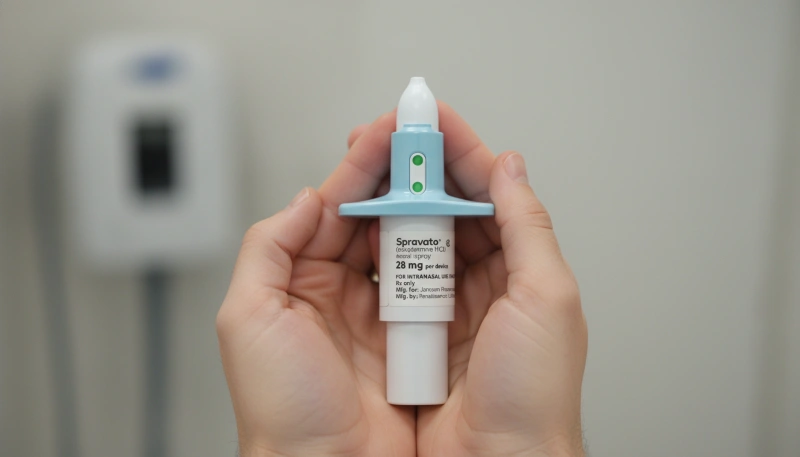
Patients self-administer the nasal spray under clinical supervision. The dose is either 56 mg or 84 mg, determined in advance by the provider. The spray takes roughly 10 minutes to administer across both nostrils. Some people notice a mild bitter taste or slight nasal irritation immediately after. Within 5 to 15 minutes, the medication begins to take effect.
Step 3: The Active Treatment Phase (How Does Spravato Make You Feel?)
This is the part patients most want to understand. The active phase lasts approximately 40 to 60 minutes, and the sensations are genuinely different from any standard medication. Here is what most patients report:
- A wave of calm: The persistent mental noise associated with depression often quiets noticeably. Worries feel less urgent. Many describe it as a rare sense of stillness.
- Dissociation: This is the most distinct feature of the Spravato experience. Dissociation means a temporary feeling of detachment, as though observing your own thoughts from a distance or watching yourself from outside your body. It is expected, clinically monitored, and typically resolves within the observation period.
- Perceptual shifts: Lights may appear slightly brighter, sounds more pronounced, or time may seem to move at a different pace. These are mild and temporary.
- Emotional softness: Some patients feel unexpected emotional releases, including tears, relief, or a loosening of long-held tension.
- Nausea or dizziness: Physical side effects such as mild nausea, dizziness, or a warm sensation in the body are common, especially in early sessions.
Important: The dissociative state Spravato produces is distinct from recreational intoxication. Patients remain aware of their surroundings, can communicate with clinical staff, and are not euphoric in the way commonly associated with substance use. The effects are clinically meaningful – they appear to interrupt rigid, depressive thought patterns and support neuroplasticity.
Step 4: The Two-Hour Observation Period
After the active phase, patients rest in the clinical setting for at least two hours. This is required under the Spravato REMS (Risk Evaluation and Mitigation Strategy) program, a federally mandated safety protocol. During this time, staff monitor blood pressure, alertness, and overall recovery. Most patients feel drowsy, reflective, or mildly “spaced out.” This is normal.
Patients cannot drive after a session and should arrange a ride home. This is non-negotiable and applies to every treatment day.
Step 5: What to Do After Spravato Treatment
The remainder of the day after Spravato treatment should be low-key and restful. Here is what clinicians typically recommend:
- Rest at home. Avoid demanding tasks, strenuous exercise, or high-stress situations for the rest of the day.
- Avoid alcohol. Combining alcohol with residual esketamine effects increases the risk of sedation.
- Do not drive or operate machinery for the rest of the day, even if you feel alert.
- Eat a light meal a few hours before the session to reduce nausea, but avoid eating immediately before.
- Journal or reflect if it feels helpful. Some patients find that insights emerge during the session and benefit from writing them down afterward.
- Contact your provider if you notice unusual mood changes, new symptoms, or anything that concerns you in the hours or days following treatment.
Most patients feel emotionally steadier or even noticeably brighter the next day. For others, the changes are more subtle at first and build across the initial treatment weeks.
How the Spravato Experience Changes Over Time
The standard Spravato treatment schedule begins with twice-weekly sessions during the induction phase, typically for the first four weeks, followed by a maintenance phase with weekly or biweekly sessions. The acute in-session effects do not necessarily become less intense, but most patients report becoming far more comfortable with them over time.
The Spravato experience is one where familiarity genuinely reduces anxiety: patients who understand what to expect before they start tend to tolerate treatment significantly better than those who walk in unprepared.
Clinical trial data published by PubMed (Cureus, 2024) showed statistically significant improvements in depression scores within the first four weeks of treatment, with some patients reporting meaningful symptom changes in as little as 24 hours after the first dose.
Risks and Considerations: What Patients Should Know Before Starting
Spravato is not suitable for everyone, and certain factors require careful clinical discussion:
Consideration | What It Means for Patients |
Dissociation | Expected and temporary, but may feel unsettling in early sessions |
Blood pressure increase | Monitored at every session; patients with cardiovascular conditions need provider review |
Sedation | Cannot drive after treatment; plan transportation in advance |
Substance use history | History of misuse is a contraindication; thorough screening is required |
Pregnancy or nursing | Not recommended; discuss with your provider |
Mood monitoring | Any increase in suicidal thoughts must be reported to clinical staff immediately |
Serious adverse effects, including respiratory depression, are rare but possible. This is precisely why Spravato is only available through certified treatment centers under direct clinical supervision.
What to Expect in the Weeks After Starting Treatment
Most patients do not experience a dramatic transformation after a single session. The therapeutic benefit of Spravato builds gradually. Common changes patients report across the first few weeks include:
- Reduced emotional numbness
- Improved sleep quality
- A returning interest in daily activities
- Fewer intrusive thoughts related to depression
- A sense that the fog is beginning to lift
Individual responses vary considerably. Age, brain chemistry, dosage, and concurrent treatments all play a role. Psychotherapy used alongside Spravato may enhance outcomes by helping patients process insights from their sessions and sustain progress between visits.
Ready to Learn Whether Spravato Is Right for You?
Understanding the Spravato experience is the first step. The next is a personalized evaluation with a qualified provider who can assess your history, review your current treatment, and determine whether this therapy is a good fit.
Schedule a Spravato consultation at Good Health Psychiatric Services in Brooklyn, NY. Same-day and next-day appointments are available. Call (718) 522-3600 or request an appointment online.
Frequently Asked Questions
Most patients report a wave of calm, mild dissociation, and perceptual shifts such as brighter lights or altered time perception. These effects begin within 10 to 15 minutes of administration and typically resolve within two hours under clinical supervision.
No, Spravato produces a dissociative, altered state that is distinct from recreational intoxication. Patients remain aware and can communicate with staff throughout. The experience is clinically supervised and purposefully therapeutic, not euphoric.
The active effects last roughly 40 to 60 minutes. After that, patients remain in the clinic for a mandatory two-hour observation period before being cleared to leave with a designated driver.
Spend the rest of the day resting. Avoid driving, alcohol, and strenuous activity. Eat lightly, stay home, and contact your provider if you notice any unusual symptoms or mood changes.
Some patients notice improvement within 24 hours of the first dose. For others, changes become noticeable after several sessions during the induction phase. Individual responses vary based on dosage, brain chemistry, and overall treatment history.
Dissociation during Spravato treatment is expected and monitored. It is temporary, resolves within the observation window, and is not associated with lasting psychological harm when treatment is administered in a certified clinical setting.