

An SSRI raises the amount of serotonin active between brain cells within hours of the first dose, but that rise is only the starting point. Relief from depression or anxiety arrives much later: a 2016 study in the Journal of Neurochemistry (Dankoski et al.) notes that serotonin climbs right away, yet SSRIs need 3 to 6 weeks to produce clinically meaningful antidepressant effects. Below you will learn how SSRIs change serotonin, why the benefit lags, how to tell serotonin syndrome apart from ordinary side effects, and what happens to serotonin after you stop.
How Does an SSRI Increase Serotonin in the Brain?
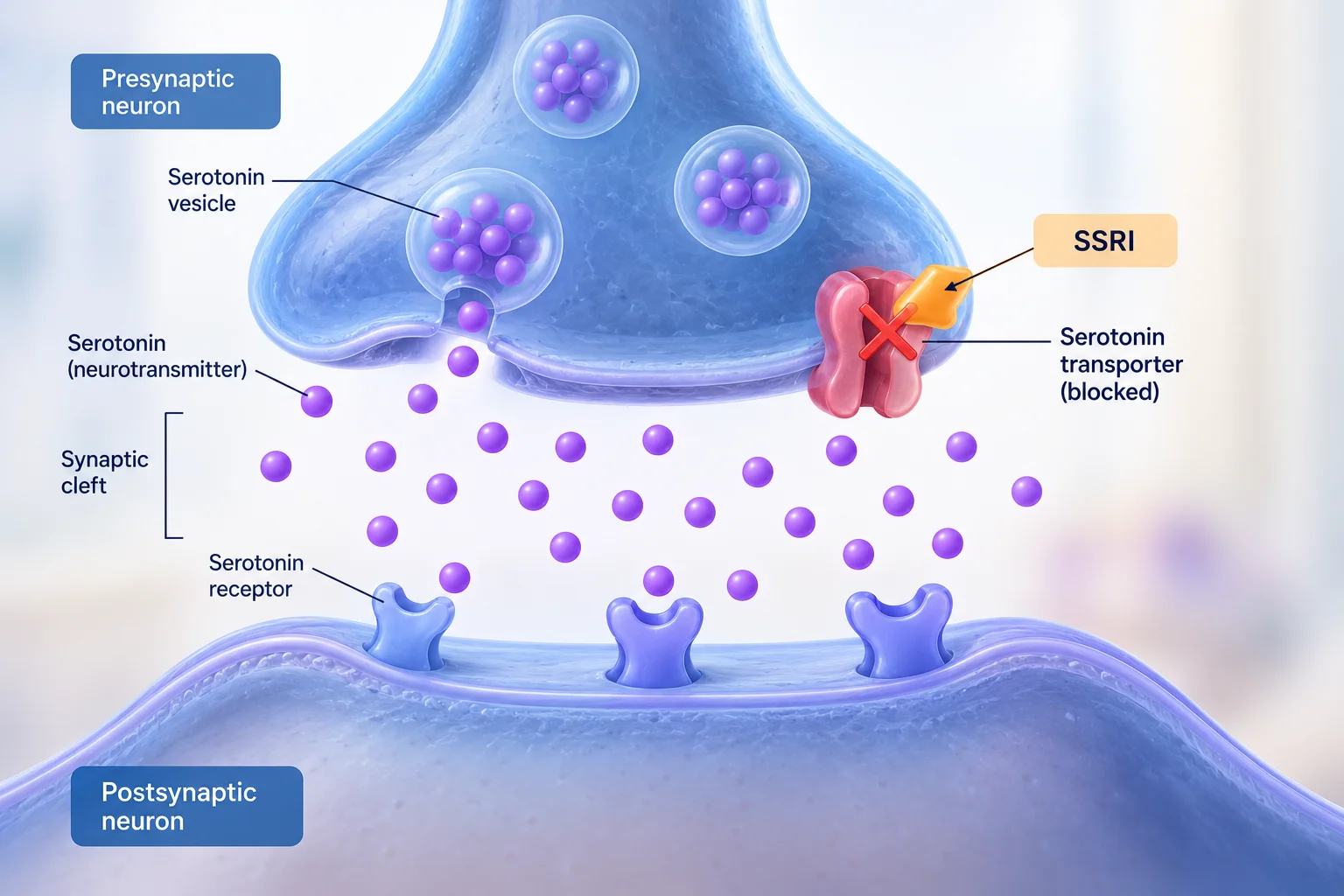
An SSRI (selective serotonin reuptake inhibitor) blocks the serotonin transporter, the pump that pulls serotonin back into the nerve cell after it is released. Serotonin then stays active between cells for longer.
Two details clear up common confusion about serotonin and SSRI treatment:
- SSRIs do not make new serotonin. They keep the existing supply active for longer, which is why taking more of a serotonin “booster” alongside them adds risk without adding benefit.
- The effect is selective. SSRIs such as sertraline (Zoloft), escitalopram (Lexapro), and fluoxetine (Prozac) act mainly on serotonin, with little direct effect on norepinephrine or dopamine.
Why Do SSRIs Take Weeks to Work If Serotonin Rises Right Away?
An SSRI increases serotonin within hours, but the brain pushes back against that surge, and the benefit depends on how it adapts over the following weeks.
Serotonin-producing cells carry their own sensors, called 5-HT1A autoreceptors, which act like a brake. When serotonin rises suddenly, these sensors slow further release. Over several weeks of steady treatment, the brakes become less sensitive, serotonin signaling settles at a higher level, and downstream changes in how brain circuits adapt (neuroplasticity) take hold.
This table shows what you might notice as those changes unfold. Timing varies by drug, dose, and condition.
| Time on an SSRI | What is happening | What you may notice |
|---|---|---|
| First hours to days | Transporter blocked, serotonin rises in the synapse | Nausea, loose stools, headache, restlessness |
| Weeks 1-2 | Autoreceptor brakes still active | Early side effects peak; sleep or energy may shift |
| Weeks 2-4 | Brakes begin to ease | Small gains in sleep, appetite, or worry |
| Weeks 4-8 | Circuits adapt to steadier signaling | Clearer improvement in mood or anxiety |
Tip: If you feel more anxious or jittery in the first week, tell your prescriber before stopping, since a lower starting dose often solves it.
If 6 to 8 weeks pass with little change, the dose may simply be too low. Reviewing the signs that your current antidepressant dose is too low helps you bring specific observations to your next visit.
Does Low Serotonin Cause Depression?
Not in the simple way the “chemical imbalance” story suggests. Researchers have not found a consistent serotonin deficit in people with depression, and SSRIs appear to work through gradual brain adaptation rather than by topping up a missing chemical.
SSRIs still remain first-line treatment for depression, generalized anxiety, panic disorder, OCD, and PTSD because clinical trials show they help many people. A full plan often pairs medication with therapy.
Do SSRIs Raise Serotonin Everywhere in the Body?
No. Most of the body’s serotonin is made in the gut, and SSRIs actually lower the serotonin stored in blood platelets, even as they raise it in the brain.
Platelets cannot make serotonin. They soak it up from the blood using the same transporter that SSRIs block, then release it to help blood clot. This one mechanism explains several familiar effects:
- Stomach upset early in treatment comes from serotonin signaling in the gut, where SSRIs act too.
- Easier bruising and bleeding happen because platelets carry less serotonin, a risk that grows when you also take ibuprofen, naproxen, aspirin, or blood thinners.
- Loose stools or diarrhea are more frequent with some SSRIs, sertraline in particular, because of their stronger action in the gut.
What Is the Link Between SSRI and Serotonin Syndrome?
Serotonin syndrome is a reaction to too much serotonin activity, and an SSRI is one of the most common ingredients in it, usually in combination with another serotonin-acting drug. People who are stable on a single, well-tolerated SSRI rarely develop it out of the blue.
According to StatPearls (NCBI Bookshelf, 2024), symptoms classically combine altered mental status, autonomic instability, and muscle overactivity, and they usually start within 6 to 24 hours of a new drug or dose change. Most cases resolve within about a day once the triggering drugs are stopped, though fluoxetine’s long half-life can stretch symptoms over several days.
Combinations that raise the risk include:
- MAOI antidepressants, which cause the most severe reactions
- Opioids such as tramadol, meperidine, and fentanyl
- Dextromethorphan cough medicines and the antibiotic linezolid
- St. John’s wort, 5-HTP, and recreational MDMA
- Drugs that slow SSRI breakdown in the liver, such as ciprofloxacin or fluconazole
How Can You Tell Serotonin Syndrome From Normal SSRI Side Effects?
Timing, temperature, and muscle signs separate the two. This comparison shows the differences that matter most.
| Feature | Common early side effects | Serotonin syndrome |
|---|---|---|
| Timing | First days to two weeks on a new SSRI | Hours after a new drug, combination, or dose jump |
| Temperature | Normal | Often raised; can become dangerously high in severe cases |
| Muscles | Normal | Twitching, jerking, rigid legs, overactive reflexes |
| Heart and sweating | Mild changes at most | Racing heart, heavy sweating, swings in blood pressure |
| Mental state | Mild restlessness | Agitation or confusion |
| Course | Fades gradually | Worsens until the trigger is stopped |
Important: Fever, muscle rigidity, confusion, or uncontrollable jerking after starting a new medication is an emergency. Call 911 or go to the nearest emergency room.
Do Serotonin Levels Go Back to Normal After SSRI?
Yes, though the brain needs time to readjust. The transporter block wears off as the drug clears, which takes about a week for most SSRIs and several weeks for fluoxetine. The receptor changes built up during treatment then reset gradually over the following weeks.
That readjustment is why discontinuation symptoms happen. A 2024 meta-analysis in The Lancet Psychiatry (Henssler et al.) found that about 31% of people who stopped an antidepressant reported at least one discontinuation symptom, compared with 17% of people stopping placebo, and roughly 3% had severe symptoms. Learning what withdrawal from a serotonin-acting antidepressant can feel like shows how much a slow taper matters.
A safer stop usually follows these steps:
- Choose a stable period with no major exams, moves, or deadlines, so returning symptoms are easier to read.
- Agree on a taper schedule with your prescriber, typically reducing the dose in steps every 2 to 4 weeks.
- Track mood, sleep, and physical symptoms daily, which helps separate short-lived withdrawal from returning depression.
- Pause at the current step or return to the last dose if symptoms become hard to manage.
- Schedule a follow-up 4 to 8 weeks after the final dose, since relapse often appears after withdrawal has faded.

What Should You Do If Your SSRI Seems to Cause Problems?
Match your response to the symptom pattern. Use this quick decision rule:
- Fever, rigid muscles, or confusion within hours of a new drug: go to the emergency room.
- Jitteriness, nausea, or poor sleep in the first two weeks: call your prescriber about a lower dose or slower increase.
- Little improvement after 6 to 8 weeks at a steady dose: ask about a dose increase or a different medication.
- Wanting to stop: plan a taper first and never quit abruptly.
Get Expert Help Adjusting Your SSRI Safely
Good Health Psychiatric Services offers same-day or next-day appointments for people who want to start, adjust, combine, or come off an SSRI. Through psychiatric medication management, psychiatrists and nurse practitioners check every drug you take for serotonin interactions and set a taper or titration plan. Visits are available in the Downtown Brooklyn office or by video across NY, NJ, PA, FL, and CT, with care in nine languages for adults, adolescents, and children. If SSRIs have not helped your depression treatment, TMS and Spravato are offered in the same practice.
Want to start, adjust, or safely taper off an SSRI? Our psychiatrists and nurse practitioners can build a plan that fits you.
Schedule a ConsultationFrequently Asked Questions
Can you take SSRI after serotonin syndrome?
Often yes, once symptoms have fully resolved and your prescriber has identified the trigger. Most episodes come from a combination, so removing the second drug may allow you to restart the same SSRI, sometimes at a lower dose. After a severe episode, prescribers more often switch to a different medication and add a written list of drugs to avoid.
Can alcohol and SSRI cause serotonin syndrome?
Alcohol is not a recognized trigger of serotonin syndrome on its own. The combination still carries real risks: more drowsiness, poorer sleep, slowed reaction time, and a higher chance that depression or anxiety returns. The bigger danger in social settings is mixing an SSRI with MDMA or certain cough medicines, which can trigger the syndrome.
Will an SSRI make me feel emotionally numb?
Some people do feel flatter, with fewer highs and lows. This emotional blunting is a recognized SSRI side effect and tends to be more noticeable at higher doses. A dose reduction, a switch to another antidepressant, or adding bupropion often restores a fuller emotional range, so mention it rather than stopping on your own.
How do I know if my SSRI dose is too high?
Persistent sweating, diarrhea, restlessness, trouble sleeping, emotional numbness, or a feeling of being “wired” after a dose increase can signal a dose above what you need. These signs usually ease within days of a small reduction. Fever, muscle jerking, or confusion are different and need emergency care.
Can I take 5-HTP or St. John’s wort with my SSRI?
No. Both raise serotonin, and adding either to an SSRI increases the risk of serotonin syndrome. St. John’s wort also speeds the breakdown of many other medications, including birth control pills. Tell your prescriber about every supplement, including sleep and mood blends that may contain tryptophan or 5-HTP.
Can a blood test check my serotonin levels?
Not in a way that guides SSRI treatment. Blood serotonin mostly reflects what platelets carry, and SSRIs actually lower it while raising brain serotonin. Serotonin blood or urine tests are used mainly to look for rare hormone-producing tumors. Your response to an SSRI is measured by symptoms and rating scales such as the PHQ-9.
Is it safe for me to take ibuprofen while on an SSRI?
Occasional use is usually fine, but regular use raises the risk of stomach bleeding because SSRIs reduce the serotonin platelets need for clotting. Acetaminophen is often the safer choice for frequent pain relief. If you also take aspirin, a blood thinner, or have a history of ulcers, ask your prescriber before using any NSAID.