

Post-Traumatic Stress Disorder (PTSD) is a serious mental health condition that affects many individuals, particularly those who have experienced trauma. As research advances, there is growing interest in alternative treatments beyond traditional therapy and medication.
One such treatment is Transcranial Magnetic Stimulation (TMS), which has garnered attention for its potential to alleviate PTSD symptoms. This article explores the effectiveness of TMS therapy for PTSD, analyzing whether it can truly help individuals struggling with this debilitating disorder.
Understanding PTSD and Its Challenges in Treatment
What is PTSD?
Post-Traumatic Stress Disorder (PTSD) is a mental health condition that occurs after someone has experienced a traumatic event. These events may include, but are not limited to, combat exposure, accidents, assaults, or natural disasters. Symptoms of PTSD can be severe and persistent, often interfering with daily functioning.
Individuals with PTSD may experience flashbacks, nightmares, anxiety, irritability, and emotional numbness, among other symptoms. Over time, untreated PTSD can have a profound impact on a person’s relationships, work performance, and overall well-being.
Challenges in Traditional PTSD Treatment
Traditional treatments for PTSD typically involve psychotherapy, such as Cognitive Behavioral Therapy (CBT), and medication, such as selective serotonin reuptake inhibitors (SSRIs). While these approaches can be effective for many, they do not work for everyone. Some individuals experience only partial relief, while others find that the side effects of medications can be difficult to manage.
Additionally, traditional treatments may take weeks or months to show significant improvements. This has led to the search for alternative therapies like TMS to provide faster and more effective results for those suffering from PTSD.
What is TMS and How Does It Work?
Overview of Transcranial Magnetic Stimulation (TMS)
Transcranial Magnetic Stimulation (TMS) is a non-invasive procedure that uses magnetic fields to stimulate nerve cells in the brain. TMS aims to alter brain activity in specific areas associated with mood regulation and mental health.
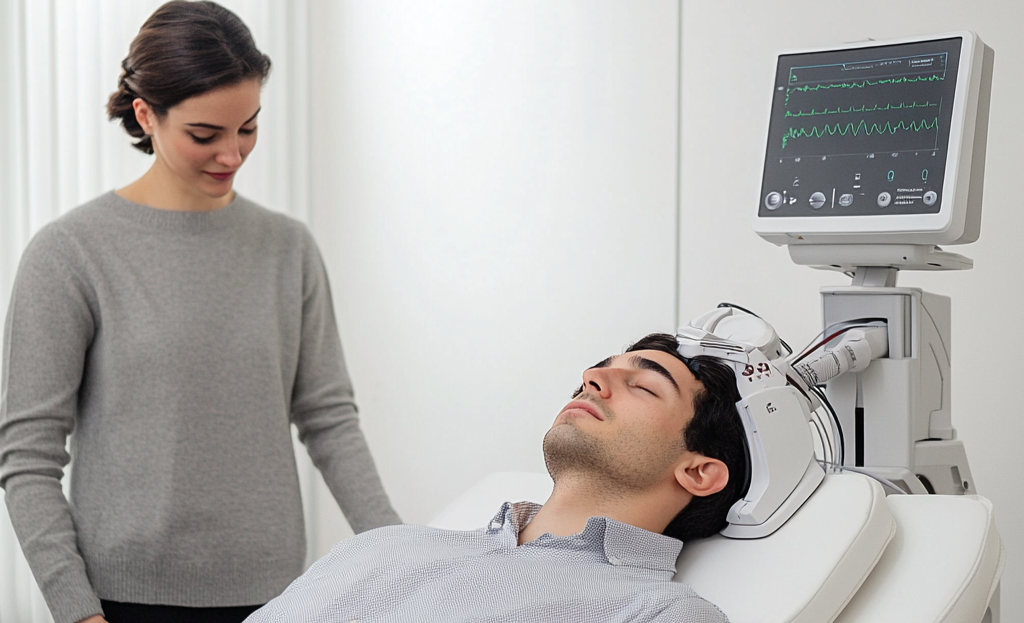
The procedure involves placing an electromagnetic coil near the patient’s scalp, which generates magnetic pulses that pass through the skull and stimulate the brain’s neurons. TMS has been FDA-approved for the treatment of major depressive disorder, and its use is now being extended to treat conditions like PTSD.
The Science Behind TMS Therapy for PTSD
Research on the use of TMS therapy for PTSD is still in its early stages, but it shows promising results. PTSD is thought to be related to an imbalance of brain activity, particularly in regions involved in fear and memory processing, such as the amygdala and hippocampus.
TMS targets these regions, helping to regulate brain function and potentially reduce the intensity of PTSD symptoms. By stimulating specific brain areas, TMS aims to restore a more balanced state of neural activity, leading to improved emotional regulation and decreased anxiety.

TMS vs. Traditional PTSD Treatments
Unlike traditional treatments, which often rely on medications or psychotherapy, TMS offers a more direct and targeted approach. One of the main benefits of TMS therapy for PTSD is that it is drug-free and non-invasive.
Patients undergoing TMS therapy can often return to their daily routines immediately after treatment without needing recovery time. TMS also has fewer side effects than many medications used to treat PTSD, making it an appealing alternative for individuals who cannot tolerate traditional treatments.
Effectiveness of TMS for PTSD: What the Research Says
Clinical Studies on TMS Treatment for PTSD
Several clinical studies have investigated the effectiveness of TMS therapy for PTSD. These studies have shown that TMS can significantly reduce the symptoms of PTSD in some individuals. In particular, research has demonstrated that TMS can decrease the frequency and intensity of flashbacks, nightmares, and anxiety.
In one study, patients who underwent TMS treatment showed significant improvements in mood, with many experiencing reductions in depressive symptoms and a general sense of relief from their PTSD-related distress. While results vary from person to person, most participants reported positive outcomes.
TMS for Complex PTSD (C-PTSD)
Complex PTSD (C-PTSD) is a more severe form of PTSD, typically resulting from prolonged or repeated trauma, such as abuse or captivity. C-PTSD can be more challenging to treat than standard PTSD, as it often involves a broader range of emotional and psychological difficulties.
However, preliminary research suggests that TMS therapy may also effectively treat C-PTSD. By stimulating brain regions responsible for emotional regulation and memory processing, TMS may help individuals with C-PTSD manage their symptoms more effectively.
Factors That Influence Treatment Success
The success of TMS therapy for PTSD can vary depending on several factors. These include the severity of PTSD symptoms, the duration of the condition, the presence of co-occurring mental health disorders, and the individual’s response to the treatment.
Some individuals may require multiple sessions of TMS therapy to achieve noticeable results, while others may experience relief after just a few treatments. Additionally, the patient’s commitment to continuing therapy and incorporating other therapeutic approaches, such as counseling, may influence the overall effectiveness of TMS for PTSD.
Advantages of TMS Therapy
Non-invasive and Drug-Free Treatment
One of the primary advantages of TMS therapy for PTSD is that it is non-invasive. Unlike other treatments, such as medication or electroconvulsive therapy (ECT), TMS does not require the use of drugs or any surgical procedures.
This makes it an appealing option for individuals who prefer to avoid medications or have not had success with them in the past. TMS is also non-surgical, meaning there are no incisions or risks associated with invasive procedures.
Minimal Side Effects Compared to Medication
Another significant advantage of TMS therapy is that it tends to have fewer and less severe side effects than traditional medications used to treat PTSD. While drugs like SSRIs can cause weight gain, sexual dysfunction, and sleep disturbances, TMS therapy has minimal side effects.
TMS’s most common side effects are mild headaches or scalp discomfort during the procedure, but these typically resolve quickly after treatment. This makes TMS a more tolerable treatment option for many individuals.
Potential for Long-Term Symptom Relief
Unlike some medications that require long-term use and may lose effectiveness over time, TMS has the potential for long-lasting results. Many patients who undergo TMS therapy report sustained improvements in their PTSD symptoms, with fewer relapses than those who rely solely on medication. This makes TMS a valuable option for individuals seeking long-term relief from PTSD.
Limitations and Risks
High Cost and Limited Insurance Coverage
While TMS therapy offers several benefits, it is not without its challenges. One of the main limitations is the cost. It can be expensive, and multiple sessions are often required to achieve meaningful results.
TMS insurance coverage is also limited, as not all insurance providers offer reimbursement for the treatment. This can make TMS therapy inaccessible for some individuals, especially those without sufficient insurance coverage.
Not All Patients Respond to TMS Treatment
TMS is not a one-size-fits-all treatment; not all patients will respond positively to the therapy. Some individuals may experience minimal or no relief from their PTSD symptoms after undergoing TMS treatment.
As with any therapy, the effectiveness of TMS can vary depending on the individual’s specific condition, brain chemistry, and personal circumstances. Patients must have realistic expectations and work closely with their healthcare providers to determine the best course of action.
Accessibility Issues
Although TMS therapy is gaining popularity, it remains less accessible than traditional treatments in many areas. Specialized TMS clinics are required to administer the therapy, and they may not be available in all regions. This can make it difficult for individuals in rural or underserved areas to access TMS therapy for PTSD.
What to Expect During TMS Treatment for PTSD
The Treatment Process
TMS therapy typically involves several weeks of daily sessions, each lasting about 30 to 40 minutes. During each session, a magnetic coil is placed on the scalp, and magnetic pulses are directed at specific brain areas.
The procedure is painless, although patients may experience mild discomfort or a sensation of tapping on the scalp. Most patients can resume normal activities immediately after the session, making TMS a convenient option for many individuals.
Side Effects and Recovery
As mentioned earlier, the most common side effects of TMS therapy are mild headaches or scalp discomfort. These side effects are usually short-lived and subside after a few hours. Some patients may experience temporary changes in mood or a slight increase in anxiety during the initial stages of treatment. However, these effects generally resolve as the treatment progresses.
Post-Treatment Outcomes and Long-Term Management
Many patients begin to experience improvements in their PTSD symptoms after several sessions of TMS therapy. These improvements may include reduced flashbacks, fewer nightmares, and a greater sense of emotional stability.
For some individuals, TMS therapy can provide long-term relief, while others may require maintenance sessions to sustain the benefits. Post-treatment care may involve continued therapy or other interventions to ensure that PTSD symptoms remain manageable.
Summary of Key Findings
TMS therapy has shown promising results in the treatment of PTSD, offering a non-invasive, drug-free alternative for those seeking relief from the disorder. While it may not be suitable for everyone, clinical studies suggest that TMS can significantly reduce PTSD symptoms, particularly in individuals who have not responded to traditional treatments.
tms for ptsdAs research continues to grow, TMS for PTSD offers hope for individuals looking for an effective treatment option. However, it is essential to consider factors such as cost, accessibility, and individual response when exploring TMS therapy. Consulting with a healthcare provider is crucial in determining whether TMS is the right choice for managing PTSD.