

According to the American Family Physician journal, American Academy of Family Physicians, May 2024, up to 31% of patients with major depressive disorder do not reach remission despite trying two or more antidepressant medications. If that number sounds like your own story, or your loved one’s, you already know how exhausting it is to keep starting over with a new prescription and hoping this time is different.
This is exactly where TMS treatment enters the conversation. TMS treatment, short for Transcranial Magnetic Stimulation, is a non-invasive procedure that uses magnetic pulses to stimulate underactive areas of the brain involved in mood regulation, offering an alternative path for people who have not found lasting relief through medication alone.
This article walks through what TMS treatments actually involve, how they fit alongside therapy and medication, what the process looks like session by session, and the honest limitations you should know before starting.
What Is TMS Treatment And How Does It Fit Into Mental Health Care?
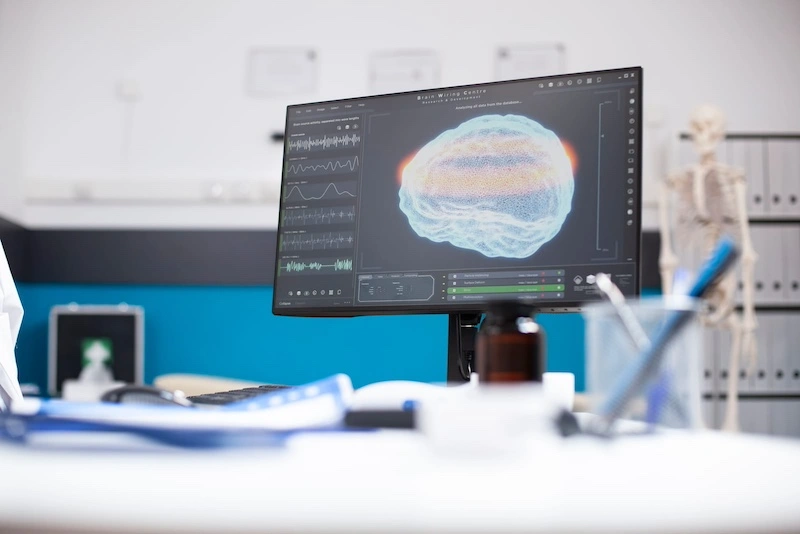
TMS treatment is a targeted, medication-free option that psychiatric providers use when standard treatments have not produced enough improvement. It works by placing a magnetic coil against the scalp, which delivers repeated pulses to the prefrontal cortex, the brain region most closely tied to mood and emotional regulation.
Unlike medication, TMS does not circulate through the bloodstream, and unlike electroconvulsive therapy, it requires no anesthesia or sedation. Providers typically position TMS treatments as a next step after two or more medication trials have not delivered adequate relief, though it is increasingly considered earlier in some treatment plans.
Why Providers Recommend TMS Treatments After Medication Trials
Antidepressants take weeks to show effect and often come with side effects that make people stop taking them before they’ve had a fair chance to work. TMS treatments sidestep that trade-off entirely, since there is no systemic exposure and side effects are typically limited to mild scalp discomfort. This makes it an appealing option for people who want relief without adding another daily pill to the mix.
How TMS Treatments Differ From Talk Therapy
Talk therapy addresses thought patterns and coping skills over time, while TMS treatment works on a physiological level to change brain activity directly. Many providers combine the two, using TMS to ease symptoms enough that therapy becomes more accessible and productive. Neither replaces the other; they tend to work best together.
What Are TMS Treatments Used For?
TMS treatments are FDA-cleared for major depressive disorder, treatment-resistant depression, and obsessive-compulsive disorder, with growing off-label use for anxiety and PTSD symptoms. The table below breaks down where TMS treatment currently stands by condition.
| Condition | Status | Typical Session Count |
| Major depressive disorder | FDA-cleared | 30-36 sessions |
| Treatment-resistant depression | FDA-cleared | 30-36 sessions |
| OCD | FDA-cleared | 25-30 sessions |
| Anxiety symptoms | Off-label, growing evidence | Varies by provider |
| PTSD symptoms | Off-label, growing evidence | Varies by provider |
What Does A TMS Treatment Session Actually Involve?
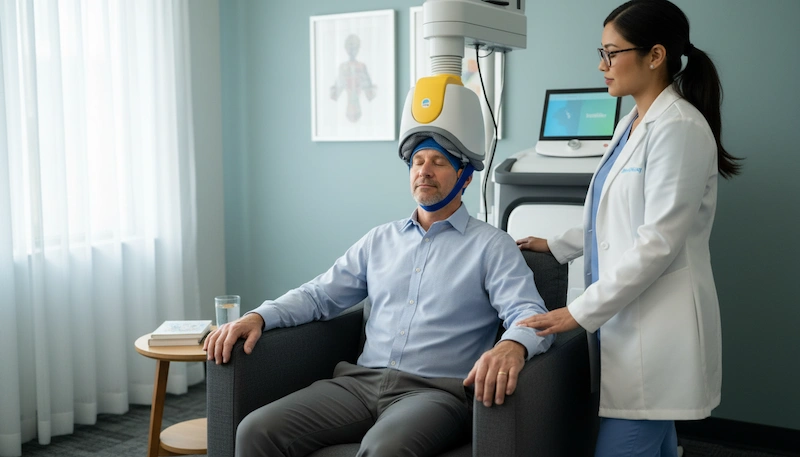
A single TMS treatment session lasts roughly 20 to 40 minutes, and a full course usually runs five days a week for four to six weeks. Here is what the process looks like from your first visit onward.
- Complete an initial psychiatric evaluation. Your provider reviews your treatment history, current symptoms, and medical background to confirm TMS therapy is appropriate for you.
- Undergo motor threshold testing. During your first session, the provider calibrates the exact pulse strength your brain needs, which personalizes every session that follows.
- Attend daily treatment sessions. You sit comfortably while the coil delivers a clicking, tapping pattern of pulses; you stay awake and alert throughout.
- Track symptoms with standardized scales. Providers check your progress regularly using validated mood measures to see whether the plan needs adjusting.
- Discuss maintenance options. Once your initial course ends, your provider will talk through whether occasional booster sessions make sense for you.
What A TMS Treatment Session Feels Like
Most patients describe the sensation as a light tapping or knocking on the scalp rather than pain, and you can talk, read, or simply relax during the session. You can drive yourself home and return to work the same day, which is one of the more practical advantages compared to treatments requiring sedation or recovery time.
What Are The Benefits Of TMS Treatments?
People weighing TMS treatment usually want a clear answer to one question: is it worth the time commitment? Here’s what the evidence and patient experience consistently show.
- No systemic side effects. Because TMS does not travel through the bloodstream, it avoids the weight gain, fatigue, or sexual side effects associated with many antidepressants.
- Solid response rates for treatment-resistant cases. Peer-reviewed research shows response rates of 50% to 60% and remission rates of 30% to 40% for treatment-resistant depression, according to a study published in PMC.
- Minimal disruption to daily life. Sessions fit around work and school schedules, with no downtime required afterward.
- Expanding insurance coverage. Most major insurers now cover TMS treatments for treatment-resistant depression once documented medication trials have failed.
- A non-drug option during pregnancy or breastfeeding. Some patients who want to avoid systemic medication exposure find TMS treatment offers a path forward.
TMS treatment gives patients a genuine third option beyond “add another medication” or “just keep doing therapy,” and that alone changes the conversation for people who feel stuck. For a deeper look at how TMS compares with other advanced options, see our guide on TMS vs. Spravato for treatment-resistant depression.
What Are The Risks And Limitations Of TMS Treatments?
Being upfront about limitations matters more than making TMS sound like a miracle cure, because real decisions deserve real information.
- Results take time. Most people need two to four weeks of consistent sessions before noticing a shift, which can feel slow if you are used to hoping medication kicks in faster.
- The schedule is demanding. Five sessions a week for a month or more is a real commitment, and not everyone’s job, childcare, or transportation situation makes that easy.
- Not everyone qualifies. People with certain metal implants near the head, a seizure history, or specific neurological conditions may need to explore other options.
- Seizure risk exists, though rare. This is uncommon but is why sessions are always supervised by trained clinical staff.
- Coverage requirements vary. Some insurance plans still require documented failure of multiple medications before approving TMS treatments, which can delay access.
If you’re also exploring anxiety-specific concerns, our article on TMS for anxiety covers how the treatment applies outside of depression specifically.
The Bottom Line On TMS Treatment
TMS treatment offers a genuinely different path for people who have tried medication after medication with limited relief: a non-invasive, evidence-backed option that targets the brain directly without systemic side effects. If two or more antidepressant trials haven’t gotten you where you need to be, that isn’t a personal failure; it’s a sign your care plan may need a different tool.
The only way to know if TMS treatment fits your specific situation is to talk with a provider who will review your history honestly and walk you through what to realistically expect.
Curious if TMS treatment could work for you? Schedule a free consultation with our team today.
Frequently Asked Questions
What is TMS treatment used for?
TMS treatment is FDA-cleared for major depressive disorder, treatment-resistant depression, and OCD, and it is increasingly used off-label for anxiety and PTSD symptoms. It works by stimulating brain regions involved in mood regulation.
How do I know if TMS treatments are right for me?
TMS treatments are usually considered after two or more antidepressant trials have not provided enough relief, though every provider evaluates candidacy individually. A psychiatric consultation is the best way to confirm eligibility.
Will TMS treatment interfere with my current medication?
No, TMS treatment can typically be used alongside your current medications, and many providers coordinate the two as part of one treatment plan. Always confirm your full medication list with your provider before starting.
How long until I see results from TMS treatments?
Most patients notice meaningful improvement within two to four weeks of daily sessions, though timelines vary by individual. A full treatment course generally runs four to six weeks.
Are TMS treatments covered by insurance?
Many major insurers now cover TMS treatments for treatment-resistant depression once documented medication failures are on file. Coverage details vary by plan, so it’s worth confirming before you start.
Can I return to normal activities after a TMS treatment session?
Yes, TMS treatment involves no sedation, so you can drive yourself home and return to work or school immediately after each session.